


A plain-language guide to how mist flame technology creates a real-looking flame with no fire, what these fireplaces cost in Canada, whether they give off heat, and how to choose one.
Walk past a good water vapour fireplace and you will do a double take. The flames roll and flicker, wisps of smoke curl up off the logs, and the whole thing looks like a wood fire behind glass. Then you put your hand near the opening and it is cool. There is no fire in there at all. What you are looking at is light shining through a fine cloud of water mist, and it is one of the more convincing tricks in the electric fireplace world.
Because the effect is so different from a standard LED flame, it raises a lot of questions. How does the mist stay lit? Does it heat the room? Do you have to vent it or run a water line? And is it worth the higher price over a regular electric fireplace? This guide answers all of that, with current Canadian pricing, the main brands and models, and a buying checklist so you can decide whether mist flame is right for your space.
What is a water vapour fireplace?
A water vapour fireplace, also called a mist fireplace or a 3D water vapor fireplace, is an electric fireplace that creates its flames from illuminated water mist instead of a printed flame strip or a rotating LED reflector. A small amount of water is turned into a cool fog inside the unit, then lit from below so it reads as rising flame and smoke. The flame is cool to the touch and there is no combustion, no smoke you can breathe, and nothing to vent.
The technology sits at the top of the electric category on realism. If you have compared units in person, the difference is obvious next to a basic insert. Our roundup of the most life-like electric fireplaces puts mist models in context with the best LED options so you can see where the extra spend goes.
How does a water vapour fireplace work?
The effect comes from three parts working together: a mist maker, a light source, and a water supply. None of them involve heat or flame.
Ultrasonic transducers make the mist
At the base of the unit sits a small water reservoir with one or more ultrasonic transducers. These are ceramic discs that vibrate thousands of times per second. That vibration shears the surface of the water into an extremely fine, cool fog, similar to what a room humidifier does but tuned for a tight, controlled plume. The mist is made of micro-fine water droplets, so it feels cool and damp rather than hot, and it disperses into the room as ordinary humidity within a few seconds.
LED or halogen light turns fog into flame
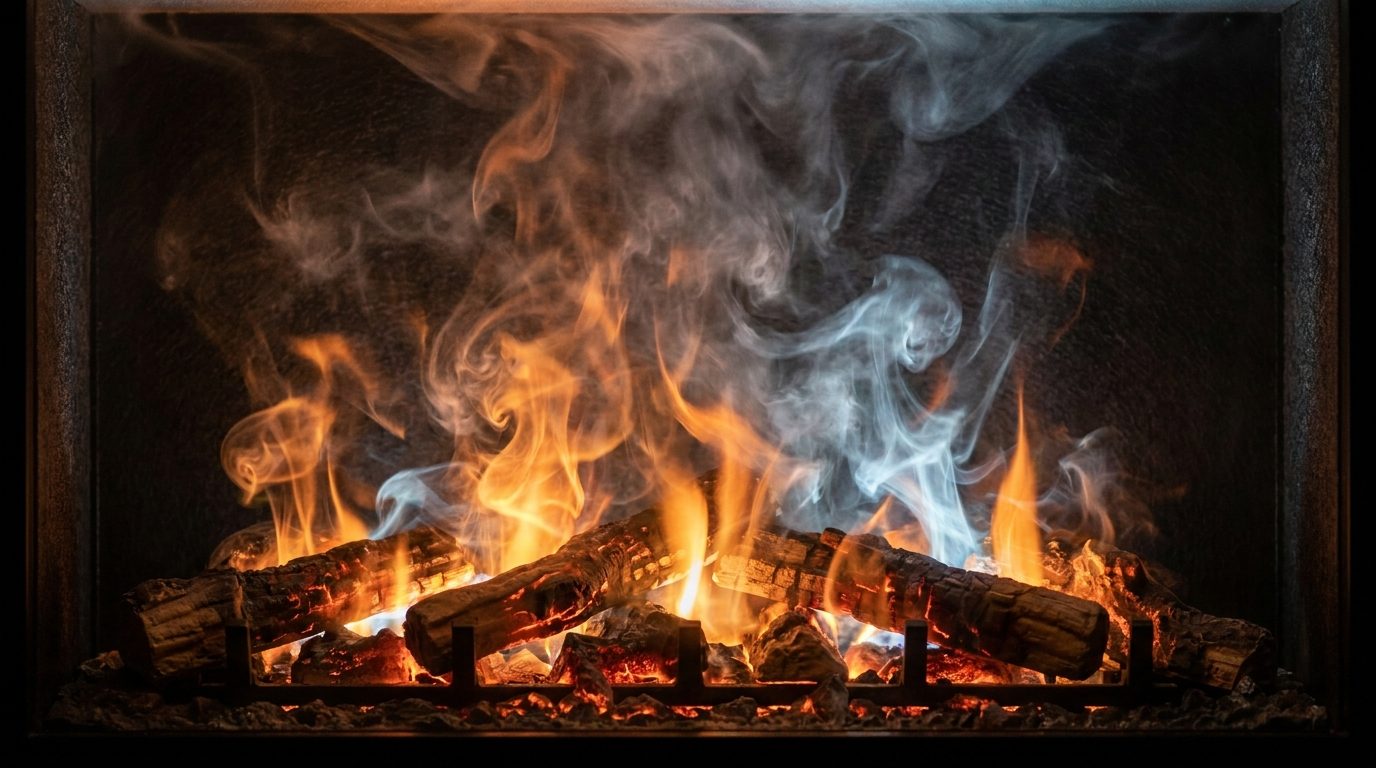
On its own the fog would just look like steam. A row of lights underneath the mist does the real work. As the fog drifts upward, the light catches the moving droplets and paints them in the amber, orange and occasional blue tones of a fire, with darker gaps reading as smoke. Because the mist is genuinely three dimensional and always moving, the flame has depth and a random flicker that a flat LED screen cannot copy. Dimplex, which holds the patents on the leading version of this technology, describes it as true 3D flame and smoke with no fuel and no venting.
A tank or a plumbed line feeds the water
The mist has to come from somewhere. Most models use a refillable tank that you top up every so often, while some built-in units can be connected to a water line for hands-off refilling. Either way the water use is small, closer to a humidifier than a tap. Manufacturers generally recommend clean distilled or demineralised water to keep the transducer clean and cut down on mineral scale, and the owner manual will tell you the exact type and refill routine for that model.
Water vapour flame vs standard LED flame
Both are electric, both are safe indoors, and both run on a normal outlet in their smaller sizes. The gap is in realism, price and what each one is really built to do.
| Feature | Water vapour (mist) | Standard LED electric |
|---|---|---|
| Flame realism | Very high, true 3D flame and smoke | Good to very good, flat or layered LED |
| Heat output | Usually little or none, ambience first | Most include a 1500W supplemental heater |
| Running parts | Transducers plus water tank | Lights and a fan only |
| Maintenance | Refill water, occasional transducer clean | Almost none |
| Adds humidity | Yes, mild humidifier effect | No |
| Typical price (CAD) | Higher, roughly $500 to $8,000+ | Lower, roughly $200 to $3,000 |
If your first priority is a flame that fools guests, mist wins. If you mostly want warmth on a cold night, a heater-equipped LED unit is the more practical pick, and our guide to how well electric fireplaces actually warm a room covers that side in detail.
Do water vapour fireplaces give off heat?
Mostly no, and this is the point people are most surprised by. The mist itself is cool, so the flame effect adds no warmth to the room. Some models bundle a separate fan-forced heater in the cabinet, but the flagship Dimplex Optimyst line is built for ambience and does not throw meaningful heat. Buy a mist fireplace for how it looks, and treat any heat as a bonus rather than the reason.
If supplemental warmth is high on your list, you have two easy options. Choose a mist model that clearly lists a built-in heater in its specifications, or pair the ambience of mist with a traditional heated unit elsewhere in the home. Our electric fireplace inserts and heated wall-mount models are made for Canadian winters, while the mist unit handles the year-round wow factor.
Do they need venting, a chimney or a gas line?
No. A water vapour fireplace needs none of the things a wood or gas fireplace needs. There is no flue, no chimney, no fresh-air intake and no gas connection, because nothing is being burned. You plug it in, add water, and turn it on. That is exactly why mist and other electric fireplaces are the default choice for condos and apartments where a combustion fireplace is not allowed, a point we cover in our guide to small electric fireplaces for condos.
There is one thing to keep in mind that a normal electric unit does not have. A mist fireplace releases a little humidity as it runs, so it gently raises the moisture level in the room. In a dry Canadian winter that is often welcome. In a small, already humid room you would simply run it for shorter stretches. It is worth planning the install properly, and our planning guide for built-in electric fireplaces walls through framing, power and placement.
How much does a water vapour fireplace cost in Canada?
Prices cover a wide range because the category runs from small imported units up to large built-in fireboxes. Based on current Canadian listings, here is roughly what to expect. Treat these as market ranges rather than a quote, since exact pricing depends on size, brand and features.
| Tier | Typical price (CAD) | What you get |
|---|---|---|
| Entry imports | about $500 to $900 | Small recessed or tabletop units, basic app or remote, mixed build quality |
| Mid-range brand | about $2,000 to $3,500 | Dimplex Optimyst cassettes and compact linear models, reliable transducers |
| Large linear and built-in | about $3,500 to $8,000+ | Wide linear fireboxes and premium built-ins such as the Optimyst e-MatriX |
| Premium and commercial | $8,000 and up | Oversized or plumbed installations for feature walls and hospitality |
You can see live pricing on the models we carry on the mist and water vapour fireplaces page. If a mist unit sits above your budget, a high-end LED model gives you most of the ambience for less, and the Napoleon vs Dimplex realistic-flame comparison is a good place to weigh those against each other.
Types of water vapour fireplaces
Mist technology shows up in several formats, so you can fit it into almost any wall or room. These are the main ones.
Cassettes and inserts
A cassette is the mist engine on its own, designed to drop into a custom opening or a piece of furniture. Inserts are similar and slide into an existing opening. Both suit builders and designers who want to hide the box inside cabinetry or a media wall.
Built-in fireboxes
These are complete units meant to be framed into a wall for a finished, flush look. They carry the deepest flame beds and the most convincing effect, which is why they anchor high-end feature walls.
Linear models
Long, low and modern, linear mist fireplaces suit the wide feature walls that are popular in new builds. If you like the shape but want heat, compare them with our linear in-wall electric fireplaces.
See-through and multi-sided
Because there is no combustion, mist and other electric fireboxes can be opened up on two or three sides to divide a room. See our see-through electric fireplaces for room-divider ideas.
Freestanding and tabletop
Smaller mist units include stove-style pieces and compact tabletop models for renters and tight spaces, which show the freestanding side of the category.
Brands and models to know
The mist category has one clear leader and a growing field around it.
Dimplex Optimyst
Dimplex developed and patented the water vapour technology behind most serious mist fireplaces, sold under the Optimyst name. The range spans small CDFI cassettes, built-in fireboxes, and the Optimyst Linear series in several widths. We reviewed one of these in our look at the Dimplex Optimyst Linear vapor fireplace, which is a good primer on how the real thing performs day to day.
Optimyst e-MatriX
The e-MatriX built-in, first launched under the Faber name and now part of the Dimplex Optimyst family, is one of the most realistic units on the market. We covered its debut in our post on the e-MatriX with mist flames.
Amantii and others
Amantii has brought Optimyst-powered models into its Signature line, which widens the design choices while keeping the same underlying mist engine. Beyond the established brands, a large field of imported units sells online at lower prices, and quality varies, so it pays to check the transducer warranty and read reviews before buying an unknown name.
Water, maintenance and running costs
A mist fireplace asks for a little more care than a standard electric unit, though nothing difficult.
- Water type: use clean distilled or demineralised water when the manual calls for it, which protects the transducer and reduces scale.
- Refilling: tank models need a top up every several hours of use, while plumbed built-ins refill themselves from a water line.
- Cleaning: wipe the reservoir and clean the transducer discs on the schedule in your manual, usually every few weeks of regular use.
- Electricity: the mist maker and lights draw very little power, so ambience-only running costs are low. Any built-in heater is the part that uses real energy.
- Humidity: run it for shorter periods in small rooms so you do not over-humidify.
None of this is a chore, but it is worth knowing before you buy so the fireplace fits how you actually live.
Where water vapour fireplaces work best
The strengths of mist point to a few rooms and situations in particular.
- Condos and apartments, where venting a real fire is not an option and the cool flame is a safety plus.
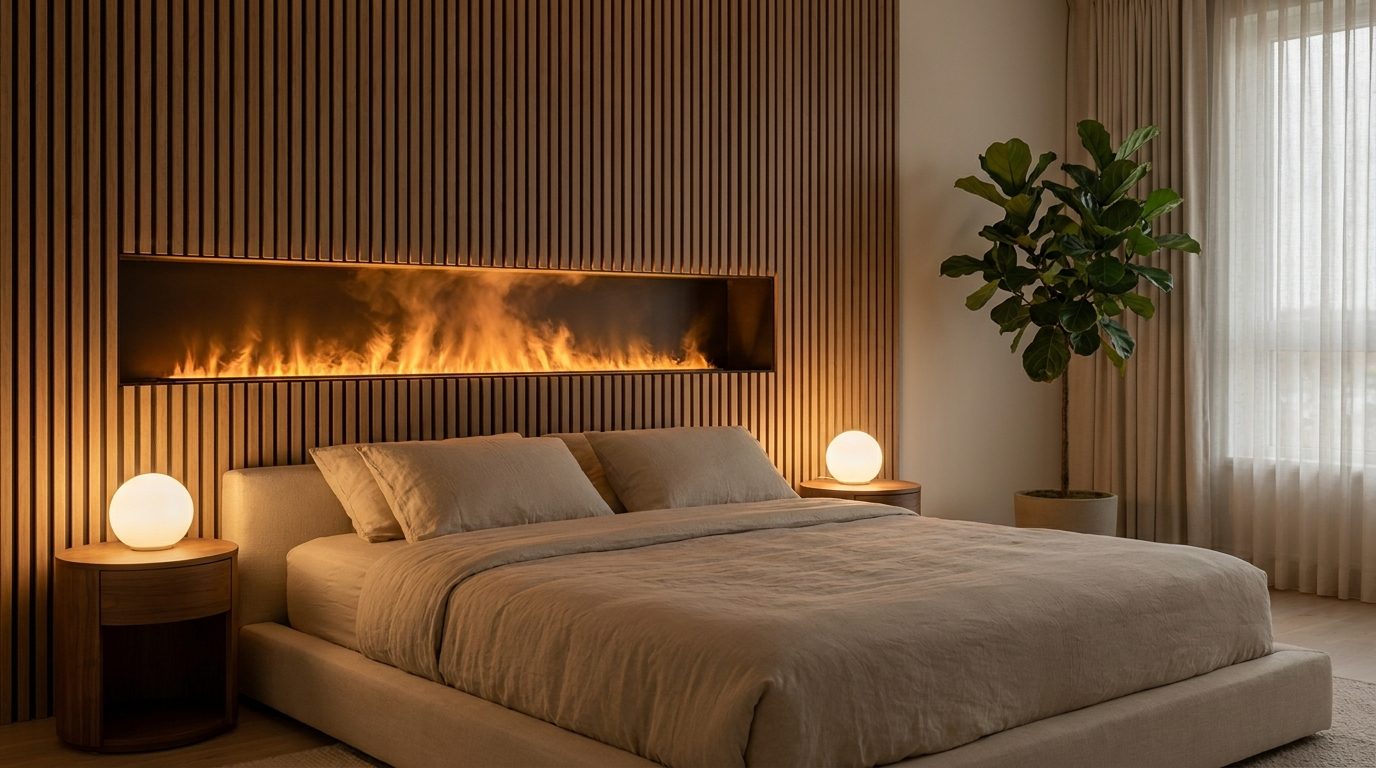
- Bedrooms and quiet spaces, where you want the look of a fire without a blast of heat.
- Feature walls and room dividers, where a see-through or linear unit becomes the focal point.
- Hospitality and retail, where a realistic flame runs all day without fuel, flame or fumes.
- Year-round use, since you can enjoy the flame on a mild evening in July with no heat at all.
Not sure which format suits your room? Our short fireplace quiz narrows it down in a couple of minutes, and you can style the ember bed with decorative logs and crystals once you choose.
Are water vapour fireplaces safe?
They are among the safest fireplaces you can own. There is no open flame, no carbon monoxide, no real smoke and no hot glass front, so the risks that come with combustion simply are not present. That makes them a sensible pick for homes with young children or pets, and it is the theme of our earlier post on water vapour fireplaces as a safe way to add warmth.
They are still electrical appliances, so the usual rules apply. Use a suitable outlet, avoid running any built-in heater through a light-duty extension cord, and follow the manufacturer instructions. For general guidance on using electric heating safely, the Electrical Safety Authority is the authority in Ontario. When in doubt about wiring a larger built-in, bring in a licensed electrician.
How to choose a water vapour fireplace
Run through these questions before you buy and the shortlist becomes clear.
| Decide this | Why it matters |
|---|---|
| Ambience or heat | Mist is ambience first. If you need warmth, pick a model with a listed heater or add a heated unit elsewhere. |
| Size and shape | Measure the wall or opening. Linear suits wide walls, cassettes suit custom cabinetry, tabletop suits small spaces. |
| Install type | Freestanding and plug-in are simple. Built-in and plumbed models need framing, power and sometimes a water line. |
| Water supply | A tank is easy but needs refilling. A plumbed line is hands-off but needs a nearby connection. |
| Budget | Set a range using the pricing table above, then match brand and size to it. |
| Brand and warranty | Favour proven Optimyst-based units and check the transducer warranty on cheaper imports. |
If you would rather see the flame in person before deciding, that is the best test there is. You are welcome to visit our Vaughan showroom to compare mist against LED side by side, or contact our team with your room dimensions and we will point you to the right model.
Pros and cons at a glance
| Pros | Cons |
|---|---|
| The most realistic flame in the electric category | Higher price than standard LED units |
| Cool to the touch, no combustion or fumes | Little or no heat on most models |
| No venting, chimney or gas line | Needs water refills or a plumbed line |
| Safe for condos, children and pets | Transducers need occasional cleaning |
| Runs year round, flame with or without heat | Adds humidity, which small rooms may not want |
Bring one home
A water vapour fireplace is the closest an electric unit gets to a real fire, and for a lot of Canadian homes that realism, with none of the venting or safety headaches, is exactly the point. Browse the current range of mist and water vapour fireplaces, take the fireplace quiz to match one to your room, or reach out through our contact page and we will help you plan it.
Frequently asked questions
How does a water vapour fireplace work?
It uses ultrasonic transducers to turn water into a fine, cool mist, then lights that mist from below with LEDs so it looks like three dimensional flames and smoke. Nothing burns, so the flame is cool to the touch and needs no venting.
Are water vapour fireplaces good?
Yes, if realism is your goal. They produce the most convincing flame in the electric category and are safe indoors with no combustion. The trade-offs are a higher price and little or no heat, so they suit buyers who want ambience over warmth.
Does a water vapour fireplace put out heat?
Usually very little or none. The mist is cool, so the flame adds no warmth. Some models include a separate fan heater, but many, including the flagship Dimplex Optimyst units, are built for ambience only. Check the specifications if heat matters to you.
How much does a water vapour fireplace cost in Canada?
Roughly $500 to $900 for small imported units, about $2,000 to $3,500 for mid-range brand models, and $3,500 to $8,000 or more for large linear and built-in fireboxes. Premium and commercial installs run higher.
Do water vapour fireplaces need to be vented?
No. There is no combustion, so they need no chimney, flue or fresh-air vent and no gas line. You plug the unit in and add water. They do release mild humidity into the room as they run.
What is a water evaporation fireplace?
It is another name for a water vapour or mist fireplace. It creates its flame effect from illuminated water mist rather than from burning fuel, so it is a type of electric fireplace.
Which water vapour fireplace is the best?
The Dimplex Optimyst range, including the Optimyst Linear and the e-MatriX built-in, is widely considered the benchmark because Dimplex developed the patented technology. Amantii Signature models use the same engine. The best one for you depends on size, install type and budget.
How do you install a water vapour fireplace?
Plug-in and freestanding models simply need an outlet. Built-in and cassette models are framed into a wall like any electric firebox, with power run to the location and, on some units, a water line for automatic refilling. Larger built-ins are best wired by a licensed electrician.
What are the different types of water vapour fireplaces?
Cassettes and inserts, framed-in built-in fireboxes, wide linear models, see-through and multi-sided units, and freestanding or tabletop pieces. The mist engine is the same across them, so the choice is mostly about size and installation.
What water do you put in a water vapour fireplace?
Most manufacturers recommend clean distilled or demineralised water. It keeps the transducer clean and reduces mineral scale. Always follow the water type and refill instructions in your model’s manual.
Do water vapour fireplaces use a lot of electricity?
No, when run for ambience only. The mist maker and lights draw very little power. If a model has a built-in heater, that heater is the part that uses real energy, similar to any electric space heater.
Can you use a water vapour fireplace in a condo?
Yes. With no venting, gas or open flame, mist and other electric fireplaces are ideal for condos and apartments where combustion fireplaces are not permitted. Always check your building’s own rules before installing.
Is a water vapour fireplace better than an LED electric fireplace?
It has a more realistic flame, but it costs more and usually gives little heat. A standard LED electric fireplace is cheaper and most models include a heater. Choose mist for looks and LED for practical warmth.
Do water vapour fireplaces make the room humid?
They add a small amount of humidity, similar to a modest humidifier, because the flame is made of water mist. In dry Canadian winters that is often a benefit. In a small or already humid room, run it for shorter periods.
How often do you refill the water?
Tank models typically need a top up after several hours of continuous use, though this varies by size and mist setting. Built-in models connected to a water line refill themselves and rarely need attention.
Are water vapour fireplaces safe around children and pets?
Yes. The flame is cool to the touch, there is no open fire, no hot glass and no fumes, which makes them one of the safest fireplace types for homes with children or pets. They are still electrical appliances, so normal outlet safety applies.